


A student leader shared warnings of a Sharia ‘Takeover’ after Michigan’s Senate race. He says it was just a conversation about faith.

Campaign rhetoric questioning Democrat Abdul El-Sayed’s Muslim faith didn’t end on Election Day. At Clark Atlanta University, a prominent student creator’s reposts sparked a sharp divide over where religious conviction ends and political bias begins.

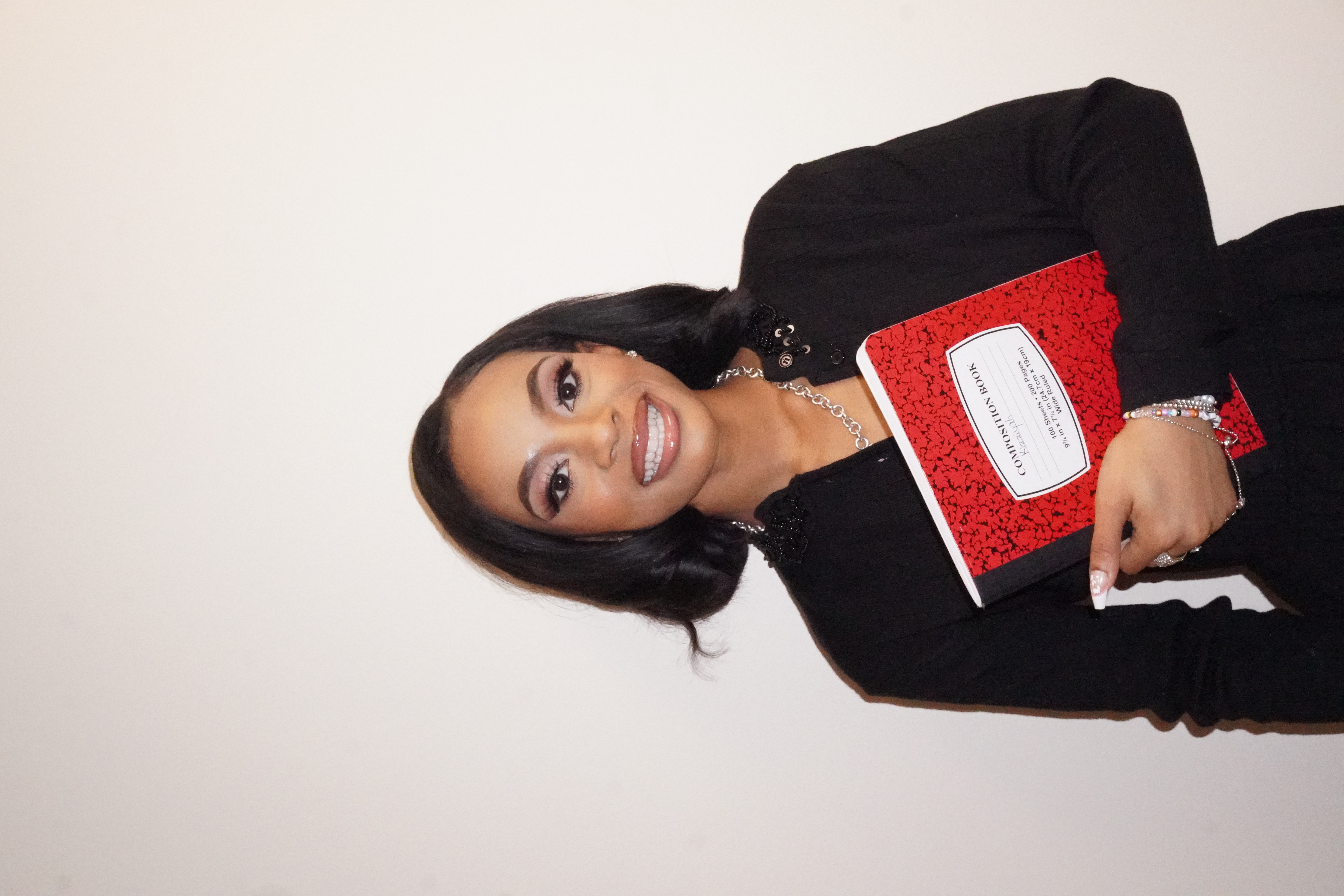
On the morning after the midterm election, well-known student leader and Christian social media creator Caleb Riggins took to Instagram and began reposting a series of Christian and right-wing content questioning and debating Islamic values in light of Michigan’s election results.
Abdul El-Sayed, a Democrat and follower of the Islamic faith, had just won Michigan’s U.S. Senate race, defeating Republican Mike Rogers. He became one of the most closely watched political figures in the country following a campaign that drew attention to his Muslim faith.
Riggins’ posts included content suggesting that Islam and Sharia Law were taking over the United States. “It’s happening right under people’s noses and people can’t dare blame God for the outcome of their decision,” one repost stated. “God warned America and they didn’t listen.”
Muslim students, including Asiya El Sheik, a sophomore majoring in business administration with a concentration in supply chain management, call Riggins’ actions “distasteful,” “embarrassing,” “unnecessary,” “ignorant,” and “tone-deaf.” Comments like these, some students have said, speak to America’s hidden biases that continue to appear at the helm of political situations.

Riggins previously served as president of the Class of 2029 after being elected in 2025. His term was cut short for reasons pertaining to his GPA. He has also served as Mister Delta Sigma Theta for Delta Sigma Theta Sorority, Inc., Sigma Chapter at Clark Atlanta University for the 2026–2027 school year. As of November 14, he is no longer included in the chapter’s new royal court marketing materials on Instagram. However, the chapter has not confirmed his removal.
When asked whether El-Sayed’s election concerned him, Riggins said his political views were rooted in his Christian faith rather than a political party.
“As a leader, I’m never above critique. I’m never above correction. Correct me with love, though. Don’t bash me.” —Caleb Riggins
“I’m not Republican or Democrat. I’m pro-Jesus. I’m pro-Christianity. Whoever has the values of the kingdom of God, that’s who I’m voting for because I’ve learned someone could be a Democrat, someone can be Republican, and still be an evil person,” said Riggins. “So, I learned I’m not gonna go with the mass majority.”
El-Sayed was met with criticism from some Americans throughout his political campaign. His Muslim identity became a subject of political discussion, with some opponents questioning how his religious beliefs would influence his potential service in the Senate.
“The Republican argument against electing Abdul El-Sayed as a senator is becoming perilously close to ‘Don’t vote for him because he’s a Muslim,’” wrote Stephen Collinson on CNN.
President Donald Trump also contributed to rhetoric targeting the Democratic nominee in Michigan. The campaign against El-Sayed raised questions about the role of religious identity in American political representation and the constitutional protections surrounding religious freedom.
Corey Brettschneider, a Brown University professor and host of the podcast “The Oath and the Office,” argued that rhetoric directed at El-Sayed raises serious constitutional concerns. Brettschneider questioned a person’s trustworthiness based on their Muslim faith and suggesting they should face additional security screenings to enter Congress.
Riggins disputed the characterization that his content reflected a negative reaction to the religion of the newly elected senator, and was directed against Muslims.
“I don’t hate the man that won the Democratic Party for Michigan,” said Riggins. “Even when I posted, I didn’t say ‘I hate Muslims’. I didn’t say ‘I’m against Muslims’. I never posted that. I just posted news reports... People think I got beef with Muslims… I love all people… I’m going to tell you this though: I’m pro-Jesus.”
When asked whether his criticism was derived from questioning whether Islam was the correct faith, Riggins reframed the exchange as an open conversation rather than a criticism of the religion.
“Jesus Christ says something very controversial. He says, ‘I am the way, the truth, the life.’ Not my words. These are Jesus Christ’s words. Basically, Jesus Christ is essentially saying that I am the only way to heaven. I am the only God, right? So the question isn’t is Islam a true religion. The question isn’t [are] there multiple pathways to God. The question is, was Jesus Christ telling the truth or not?”
Despite his beliefs, Riggins expresses remorse about how his message was interpreted, “If I hurt some people, I apologize for that… because I understand I can’t control how things are perceived.” In response to the internet discourse and backlash he received, he says he remains open to critique. “As a leader, I’m never above critique. I’m never above correction. Correct me with love, though. Don’t bash me.”
Part 2: Coming Friday, November 20, 2026






Comments